
作者/Author(s): Oliver Stuenkel and Alexander Gabuev
網站來源/Source: Foreign Affairs
日期/Date: 11/18/2025
關鍵字/Keywords: 國際秩序、金磚國家集團、BRICS
摘要:
雖然金磚國家集團成員對川普政府所造成的全球不穩定抱有一致的擔憂,但內部分歧導致他們也無法真正填補全球領導權的空缺。
- 金磚國家集團創始成員國對是否擴大成員意見分歧,擔心影響力被稀釋、以及集團凝聚力減弱。
- 在最近的金磚國家集團高峰會上,成員未能發布聯合公報,部分領導人甚至缺席。成員國在去美元化的推進速度與方式、對美敵對程度,以及北京主導集團的野心間存在分歧。此外,雖各成員國認為有必要改革聯合國安理會,但卻對南非成為常任理事國一事產生爭議。
- 儘管金磚國家集團一直強調不干涉主義、反軍國主義、以及遵守國際法等國際規範,但對於其新成員伊朗核設施遭美以攻擊,集團只發表一份模糊不清的聲明。
- 金磚國家集團之間缺乏經濟整合、且各國經濟利益彼此矛也削弱了內部凝聚力。即便成員都希望找出共同策略來應對美國關稅的衝擊,這種不協調現象仍持續存在。
- 川普再度當選確實重新喚起金磚國家集團的活力,但不同的國家發展、衝突的經濟目標、以及對彼此地緣政治意圖的高度不信任,阻礙了組織的進展。隨著新成員加入,困境更趨複雜。
- 成員國已經意識到現任美國政府的不可靠性,以及北京取代美國成為全球領導者的契機。然而,各國既不願與中國緊密結盟,也不願將國家利益與任何單一強權掛鉤。
Summary:
Despite sharing similar concerns about the instability caused by the Trump administration, BRICS has yet to seize this global leadership vacuum due to internal disagreements.
- The founding members of BRICS had a contradiction regarding new admission into their bloc due to concerns about loss of influence and the group's cohesion.
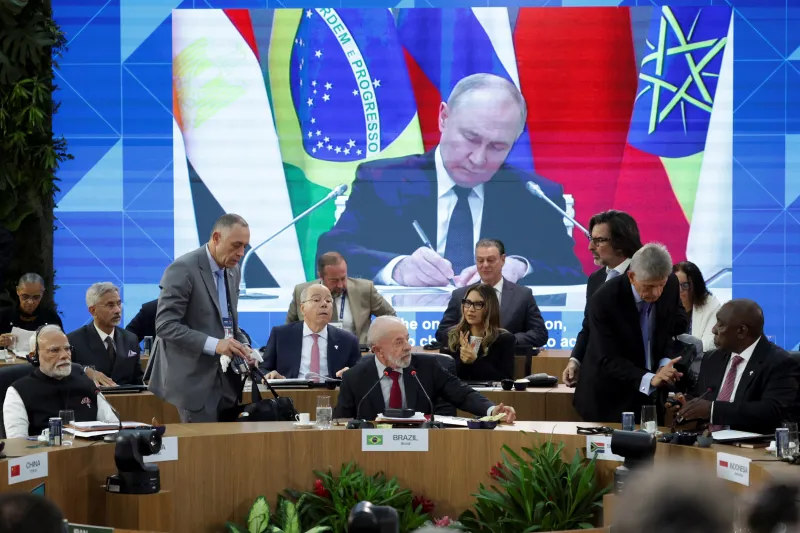
- At the recent BRICS summit, the bloc failed to issue a joint communiqué, and some leaders were also noticeably absent from the summit. They had differing views on how quickly and in what way de-dollarization should proceed, the extent of hostility toward the United States, and Beijing's ambitions to lead the group.. While acknowledging the need to reform the UN Security Council, they disputed the ascension of South Africa for a permanent seat.
- Although BRICS upheld international norms such as principles of non-intervention, opposition to militarism, and adherence to international law, it only issued a vague statement about the US and Israeli attack on Iranian nuclear facilities, which is a new member of the bloc.
- The lack of inter-BRICS economic integration and conflicting economic interests also undermined the bloc's cohesion. This disharmony happened despite members wanting a common strategy to overcome the implications of the US tariffs.
- Although Trump’s reelection reinvigorated BRICS, the organization’s progress was hampered by different national agendas, clashing economic goals, and significant distrust regarding each member’s geopolitical intentions. The predicaments only grow with the addition of new members to the bloc.
- The members also acknowledge the unreliability of the current US administration and Beijing's opportunity to replace the US as the global leader. However, they are reluctant to side with China closely or to align their national interests with any single great power.