作者/Author(s): Oliver Stuenkel and Alexander Gabuev
網站來源/Source: Foreign Affairs
日期/Date: 11/18/2025
關鍵字/Keywords: 國際秩序、金磚國家集團、BRICS
摘要:
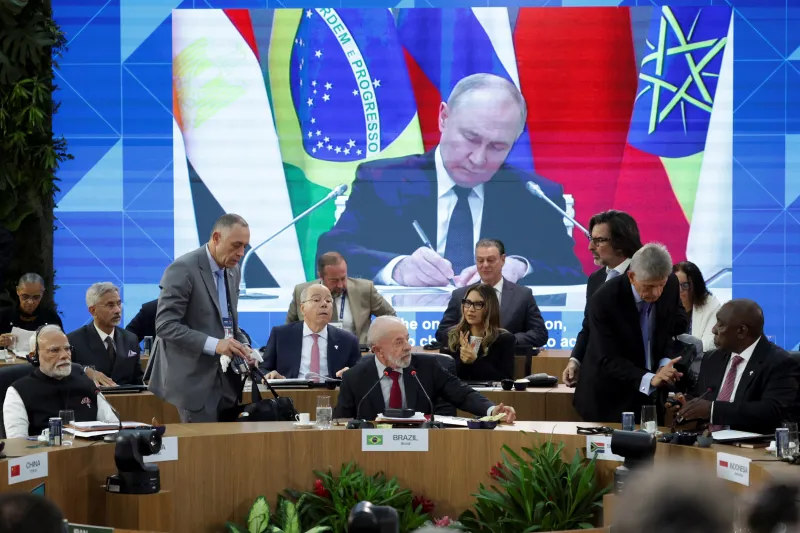
金磚國家集團成立前十年的影響力微不足道。然而美國在川普政府領導下,對國際社會的敵意越來越強,甚至持續退出原有的全球承諾,導致當前國際秩序日益碎片化。美國外交政策的轉變為金磚國家集團提供了難得的契機,成為在動盪世界中扮演避險的角色。然而,金磚國家集團內部的挑戰仍限制了他們影響全球的能力。
不同利益、相似困境
不同利益、相似困境
- 川普將金磚國家集團視為「反美集團」,並對其中一些成員國逐一挑起衝突。各國承受美國壓力的能力不一,但這個集團突顯出「集體凝聚力」作為抵禦美國壓迫的重要性。
- 北京視金磚國家集團為減輕其過度依賴美國主導之國際經濟秩序的風險的平台,也是推動自身經濟利益的機會。川普反覆無常的行為也印證了中國的悲觀看法,因此金磚國家集團更積極推動非美元金融貿易體系。
- 俄羅斯因入侵烏克蘭而受到西方的經濟與科技制裁。雖然莫斯科與華盛頓的關係在川普治下有所改善,但他在支持烏克蘭或俄羅斯參與戰爭的問題上始終搖擺不定。因此,俄羅斯將金磚國家集團視為抵禦西方制裁壓力的重要屏障,並視其為削弱美國在全球金融與科技領域主導地位的手段。
- 巴西、印度與南非也與美國不睦,理論上這會讓金磚國家集團成員間更加緊密。
- 川普對巴西進口商品課徵 50% 關稅,並制裁多名高層官員,以抗議巴西對波索納洛的司法調查。
- 南非與美國關係在川普猛烈斥責南非總統拉瑪佛沙、散播虛假敘事、削減對南非的發展援助並威脅祭出高額貿易懲罰後跌至新低點。
- 印度與中國相似,將金磚國家集團視為對抗美國政策波動的避險機制,但其策略更傾向多邊結盟而非選邊站隊。
- 新加入金磚國家集團的 成員與合作夥伴國家擔心與美國關係過密反而變成負擔,因此希望深化與金磚國家集團的合作,以分散自身面臨的風險。
Summary:
BRICS was insignificant during the first decade of its establishment. However, the current international order is increasingly fragmented as the US becomes more hostile towards the world under Trump and withdraws from its global commitments. The US foreign policy shift presents a rare opportunity for BRICS to emerge as a hedge against a volatile world. Yet, internal challenges limit the bloc's ability to influence the world.
Different Interests, Similar Problems
Different Interests, Similar Problems
- Trump identified BRICS as an "anti-American bloc" and picked fights with some individual members within the coalition. Although the members had varying capacities to withstand US pressure, this bloc highlighted the importance of group cohesion as a hedge against US coercion.
- Beijing viewed BRCIS as a platform to mitigate risks from overdependence on the US-led international economic order and an opportunity to advance its economic interests. Trump's erratic behavior proved China's pessimism correct, and consequently, BRICS members became more proactive in pursuing a non-dollar financial and trade system.
- The West imposed economic and technological sanctions on Russia for invading Ukraine. Although Moscow's relations with Washington improved under Trump, he has been going back and forth in supporting Ukraine or Russia in the war. Consequently, Russia viewed BRICS as an essential bulwark against Western sanctions pressure and as a means to undermine the US's global dominance in finance and technology.
- Brazil, India, and South Africa also had troubled relations with the US, which, in theory, would bring BRICS members closer.
- Trump had imposed 50% tariffs on Brazilian imports and sanctioned several top Brazilian officials in protest of Brazil's judicial proceedings against Jair Bolsonaro.
- South Africa-US relations had hit a new low after Trump lambasted South African President Ramaphosa in a meeting, slandered the country with false narratives, rolled back development assistance to South Africa, and threatened to impose skyrocketing trade penalties.
- Like China, India views BRICS as a hedge against the US's policy volatility, but its strategy is more of a "multialignment" than a choice of sides.
- New BRICS members and partner countries feared that closer ties with the US would become a liability. Therefore, they hope to deepen their partnership with the BRICS to diversify their risk exposure.